Mathematics Learning Systems

Mathematics Learning Systems

Each curriculum area brings together structured mathematical investigations that help teachers guide students through observation, measurement, analysis and inference — building genuine mathematical understanding through hands-on learning.

21

Hands-on Apparatuses

100+

Structured Investigations

30+

Mathematical Concepts

350+

Schools Served

More Than Mathematics Apparatuses

Investigative Learning Systems for Mathematics Education

Su-Art Learning Systems do not replace mathematics teaching. They expand the teaching capability of Mathematics educators by enabling investigations, discussions and mathematical reasoning that are difficult to sustain consistently through paper-and-pencil activities alone.

The apparatuses, operation manuals and activity accessories together create an investigative classroom where students experience mathematics before formalising it.

Every Learning System encourages students to

01Observe
02Construct or Model
03Measure
04Compare
05Form hypotheses
06Investigate
07Accept or Reject hypotheses
08Discover mathematical relationships
09Connect investigations with symbolic mathematics

Explore the Learning Systems below to see how different branches of mathematics become investigative classroom experiences.

Hands-on Learning Experiences

Mathematics Learning Systems

Each Su-Art Learning System combines a precision-designed apparatus, an illustrated activity manual and carefully planned investigative activities. Teachers guide students through structured investigations involving observation, measurement, analysis and inference — enabling students to discover mathematical concepts through hands-on learning rather than passive instruction.

Classes VI – X

Geometry Learning System

From Construction to Mathematical Investigation
Geometry Learning System illustration

Enable investigations that are difficult to sustain consistently through paper-and-pencil activities alone.

A single geometric arrangement supports multiple theorem verifications, guided investigations, teacher-created hypotheses and collaborative discussions. Instead of repeatedly reconstructing diagrams, classroom time is devoted to observation, reasoning, measurement and mathematical thinking.

In the classroom

  • Construct and verify geometric relationships
  • Observe and interpret mathematical patterns
  • Measure and compare geometric properties
  • Form, test and revise mathematical hypotheses
  • Justify conclusions using experimental evidence
  • Communicate mathematical reasoning collaboratively

Why physical

Unlike notebook constructions, the Su-Art Geometry Learning System provides a reusable investigation platform that can be used repeatedly throughout the academic year.

Students construct, measure, compare and investigate using the supplied threads, screws, bush screws, divider, protractor, geometric cut-outs and other activity accessories.

These physical interactions encourage observation, discussion, collaborative learning and mathematical reasoning while making abstract geometry tangible.

Mathematics Covered

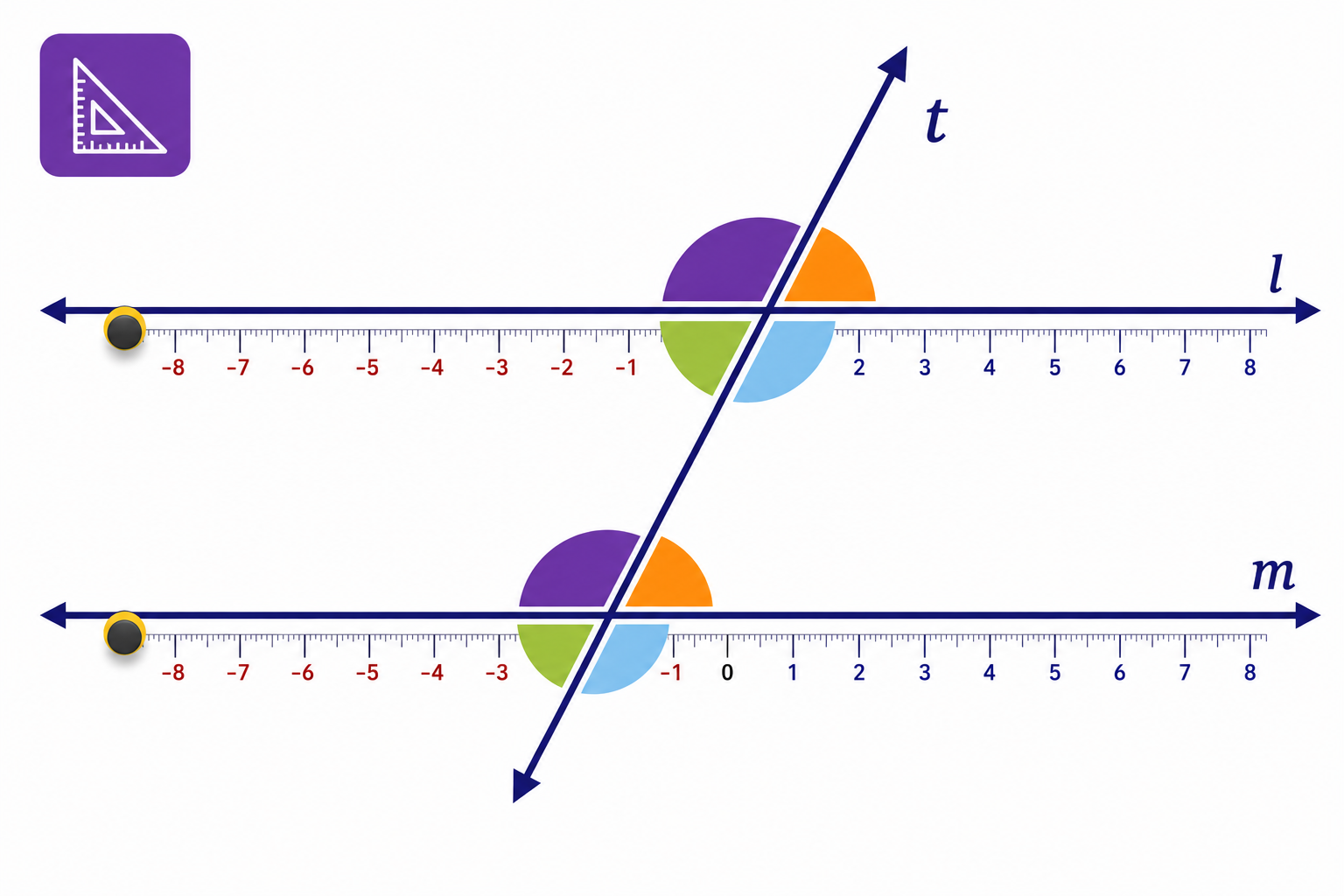
Triangle TheoremsTriangle CentresCircle TheoremsSimilarity & Basic ProportionalityCongruence of TrianglesParallel Lines & TransversalsPythagoras TheoremAngle Properties

Questions students investigate

  1. 1Where do the four triangle centres lie?
  2. 2Why do angle bisectors always meet at one point?
  3. 3How can the Euler Line be verified experimentally?
  4. 4Does the angle subtended by the same chord remain constant?
  5. 5How can Similarity and the Basic Proportionality Theorem be verified through measurement?
  6. 6What relationships exist between tangents, chords and circles?
  7. 7How can the Pythagoras Theorem be investigated experimentally?

The Operation Manual includes many additional guided investigations designed for classroom and laboratory use.
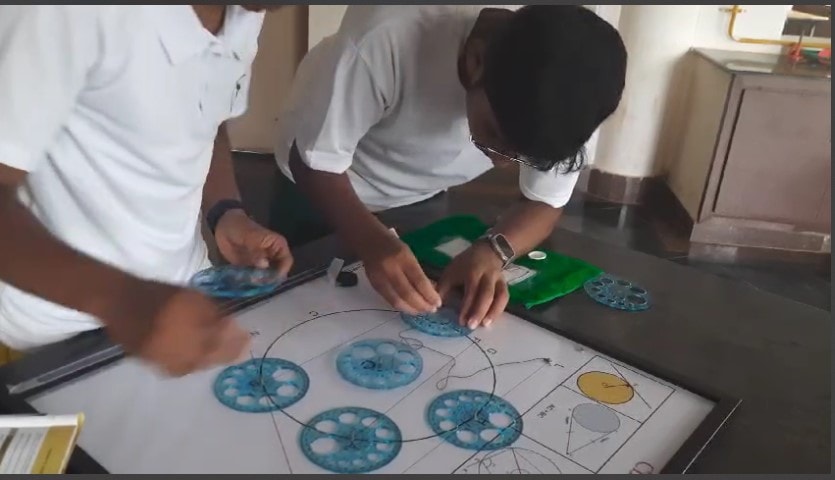
Students working on Geometry Learning System

From a real classroom

The investigations in the Operation Manual are only the beginning.

Mathematics teachers frequently extend them by framing new hypotheses and encouraging students to investigate their own mathematical questions.

A teacher challenged students with the question: "Can more than two tangents be drawn from the same external point to a circle?"

Students investigated the hypothesis using the Circle Theorem apparatus, tested different constructions and concluded that exactly two tangents can be drawn.

This investigation emerged from the teacher's classroom discussion and was not part of the original Operation Manual.
Classes VI – X

Number System & Algebra Learning System

From Symbols to Visual Understanding

Number System & Algebra Learning System illustration

Enable investigations that are difficult to sustain consistently through paper-and-pencil activities alone.

Teachers use physical mathematical models to help students visualise abstract ideas, compare different mathematical methods and discover mathematical relationships through investigation rather than direct instruction.

In the classroom

  • Model algebraic identities and verify mathematical relationships through physical arrangements
  • Model HCF and LCM using specially designed mathematical bars
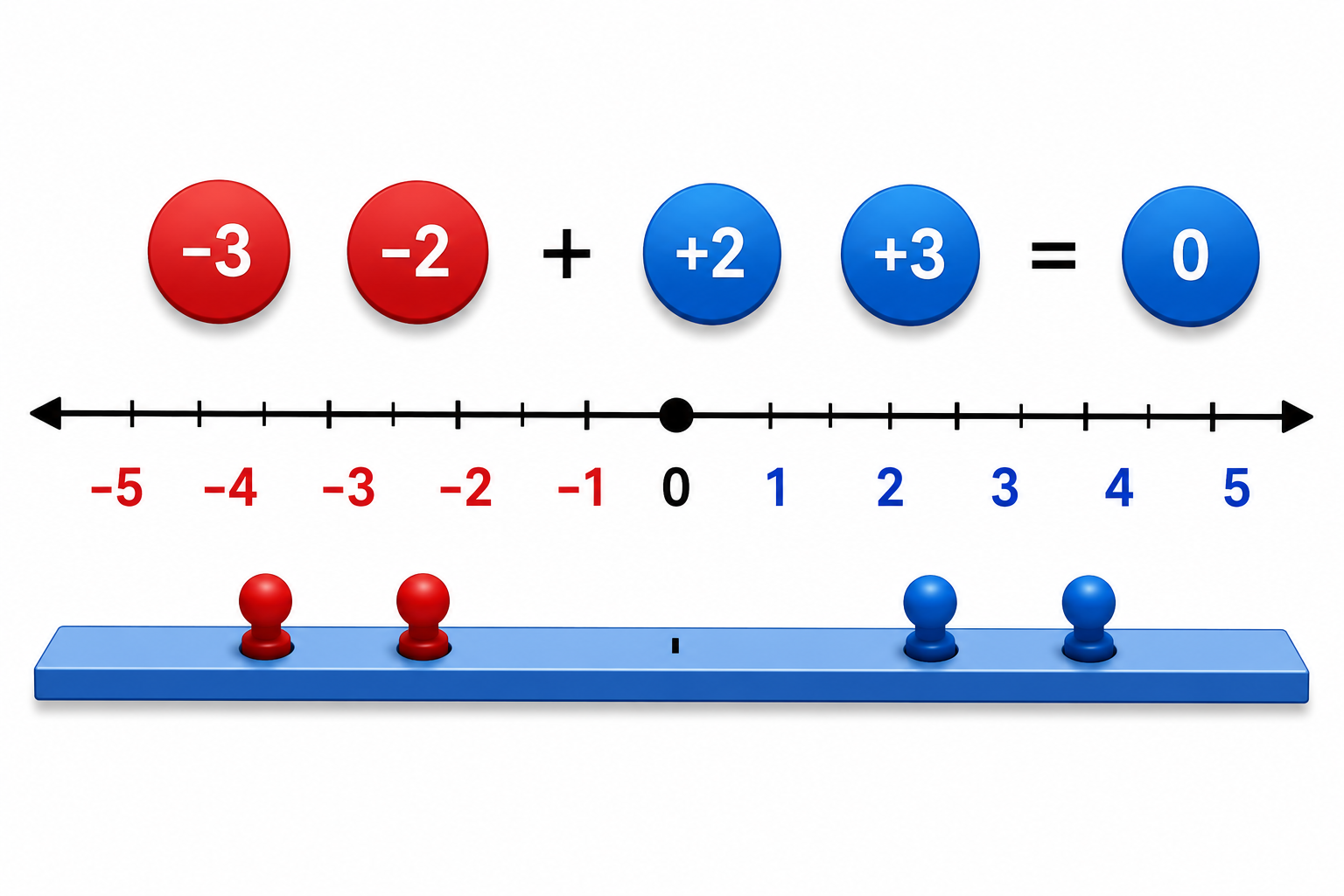
  • Visualise integer operations instead of memorising sign rules
  • Model fractions and perform addition and subtraction using fraction bars and circular fraction discs
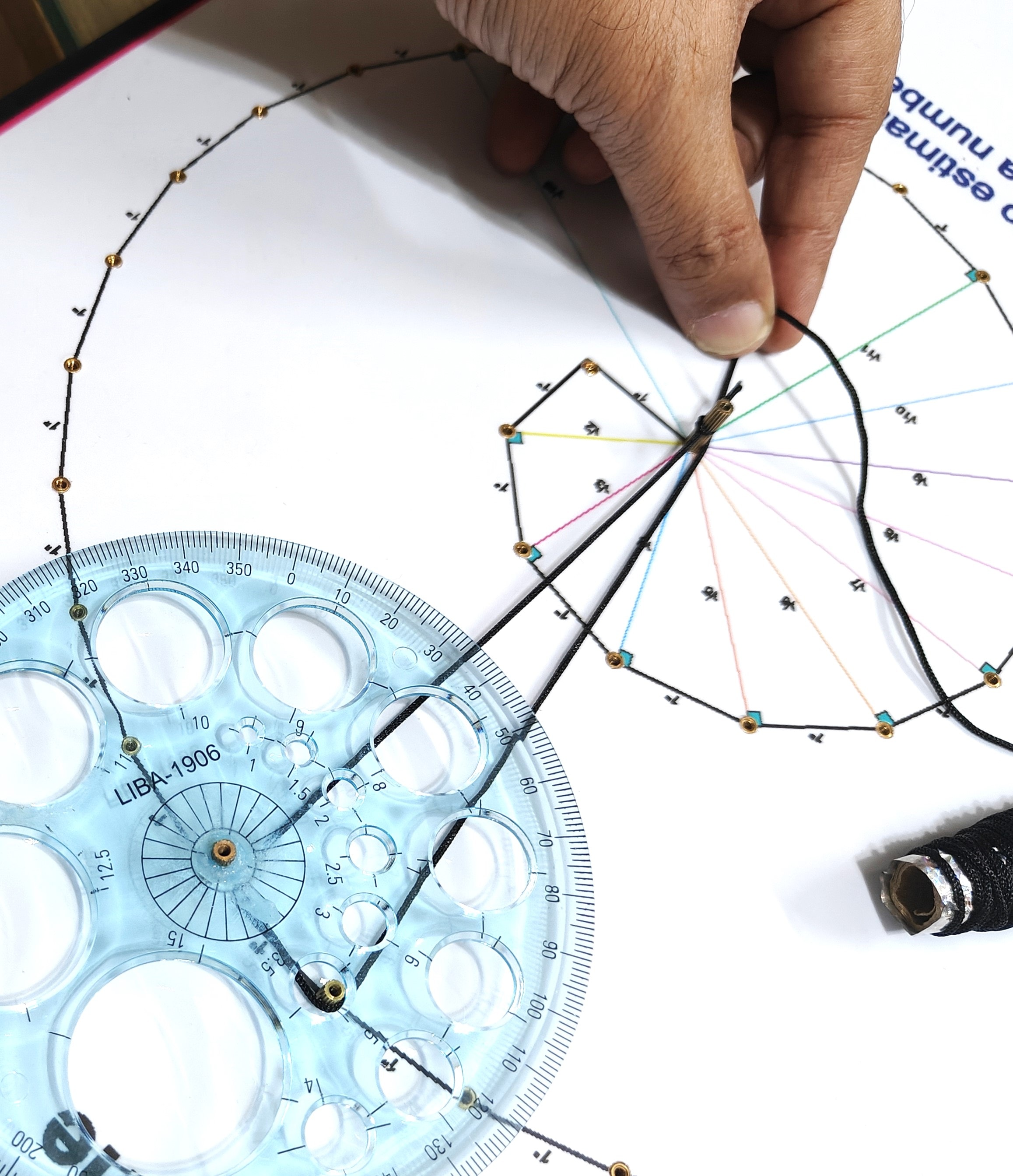
  • Construct the square root of real numbers using the Spiral of Theodorus with threads and screws
  • Determine the square root of real numbers on Cartesian axes using a divider
  • Compare Simple Interest and Compound Interest simultaneously through mathematical models and observe how their growth patterns differ

Why physical

Unlike symbolic mathematics alone, physical mathematical models allow students to see, manipulate, compare and verify numerical relationships.

Students investigate using the supplied mathematical bars, fraction discs, threads, screws, divider, mathematical cut-outs and other activity accessories, making abstract mathematical ideas visible, understandable and open for discussion.

Mathematics Covered

Algebraic IdentitiesHCF & LCMInteger OperationsFraction OperationsSquare RootSimple InterestCompound Interest

Questions students investigate

  1. 1How do different algebraic identities emerge from mathematical models?
  2. 2How can HCF and LCM be visualised instead of only calculated?
  3. 3Why do sign rules work in integer operations?
  4. 4How do fraction bars and discs help explain fraction operations?
  5. 5How can the square root of a real number be determined through two different geometric constructions?
  6. 6How does Compound Interest grow differently from Simple Interest?

The Operation Manual includes many additional guided investigations designed for classroom and laboratory use.

Students working on Number System & Algebra Learning System

From a real classroom

The investigations in the Operation Manual are only the beginning.

Mathematics teachers frequently extend them by framing new questions, comparing alternative mathematical methods and encouraging students to explore additional numerical relationships using the same mathematical models.

While comparing Simple Interest and Compound Interest, a student asked: "Why do we calculate interest only once a year? What happens if interest is calculated after six months instead?"

Instead of answering directly, the teacher encouraged the class to investigate using the apparatus. Students compared annual, six-monthly and shorter compounding periods and discovered that reducing the compounding interval continuously increased the accumulated amount.

Without formally introducing higher mathematics, the investigation naturally led students towards the idea of continuous growth and concepts they would encounter later in Senior Secondary Mathematics.

This investigation emerged from the teacher's classroom discussion and was not part of the original Operation Manual.
Classes VI – X

Measurement & Mensuration Learning System

From Measuring to Discovering Mathematics

Measurement & Mensuration Learning System illustration

Enable investigations that are difficult to sustain consistently through paper-and-pencil activities alone.

Teachers guide students from measurement to observation, observation to hypothesis, and hypothesis to mathematical discovery. Formulae become conclusions rather than starting points.

In the classroom

Measure and Estimate

  • Estimate π using three experimental methods, including the radian method
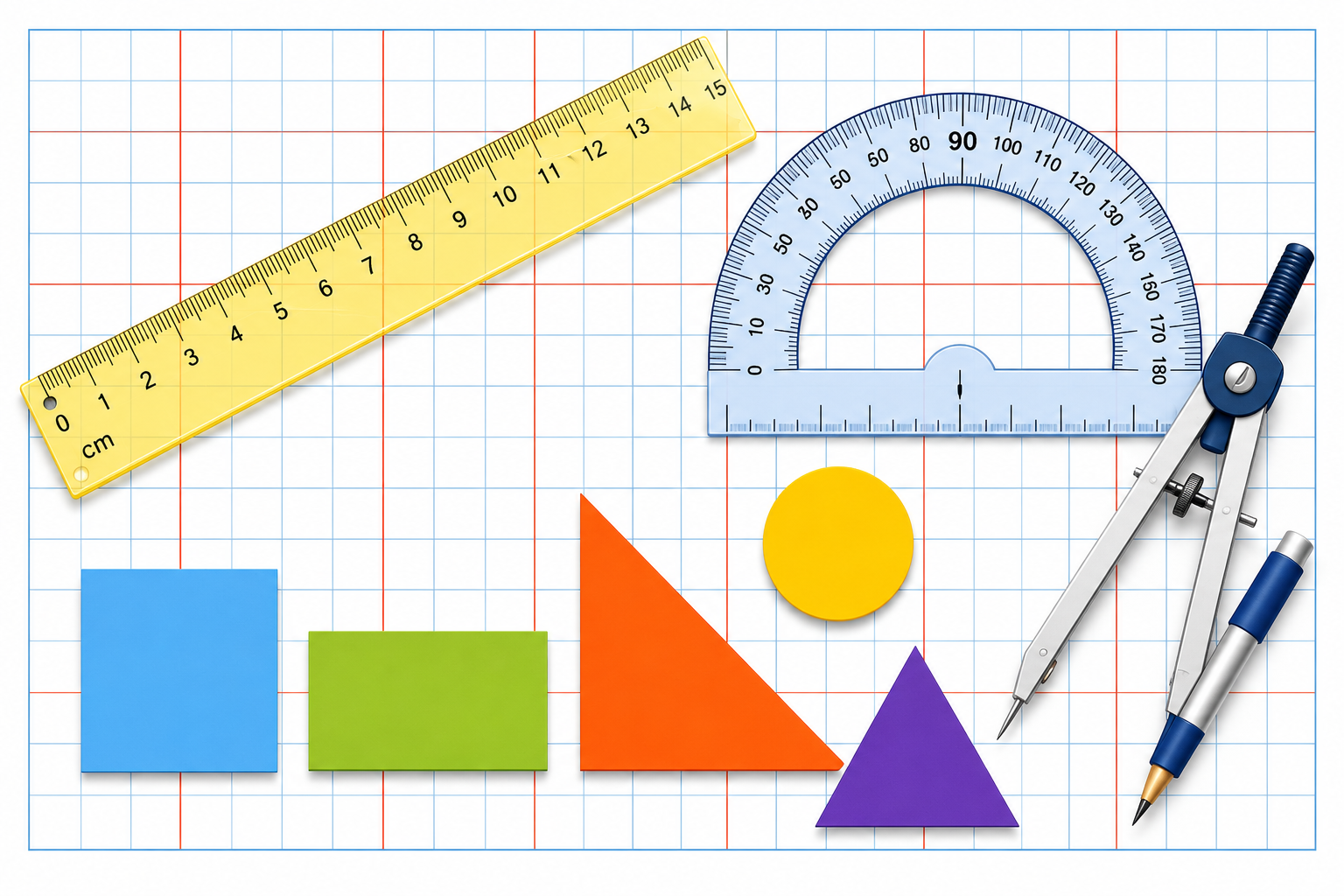
  • Measure lengths, angles, perimeters and areas using the supplied activity accessories

Construct and Derive

  • Derive the area of a circle through two independent constructions
  • Construct different quadrilaterals and determine their areas experimentally

Investigate and Compare

  • Investigate four different direct and inverse proportional relationships
  • Construct figures having the same area but different perimeters, and the same perimeter but different areas
  • Verify the Pythagoras Theorem using squares, semicircles, regular hexagons and tangrams

Why physical

Unlike notebook activities, students investigate mathematics through measurement, construction and comparison using supplied threads, screws, bush screws, divider, protractor, wooden discs, geometric cut-outs and other activity accessories.

Physical investigations naturally produce small experimental variations. Rather than treating these as errors, teachers use them to discuss approximation, measurement, assumptions and the difference between physical observation and ideal mathematical models.

Mathematics Covered

MeasurementMensurationπ and RadianCircle AreaPerimeterPolygon PropertiesArea of QuadrilateralsDirect & Inverse ProportionPythagoras Theorem

Questions students investigate

  1. 1How can π be estimated using different experimental methods?
  2. 2How can the area of a circle be derived through two different constructions?
  3. 3Can the Pythagoras Theorem be verified using figures other than squares?
  4. 4Can two figures have the same area but different perimeters?
  5. 5Can two figures have the same perimeter but different areas?
  6. 6Is the area directly proportional to the radius?

The Operation Manual includes many additional guided investigations designed for classroom and laboratory use.

Students working on Measurement & Mensuration Learning System

From a real classroom

The investigations in the Operation Manual are only the beginning.

Mathematics teachers frequently extend them by framing new hypotheses and encouraging students to discover additional mathematical relationships through measurement.

Students first observed that the area of concentric circles increased as the radius increased. The teacher then challenged the class: "Is the area directly proportional to the radius?"

Students measured, compared and rejected the hypothesis. The teacher encouraged them to investigate the relationship with the square of the radius instead.

Students discovered that the area is proportional to r², not r.

This investigation emerged from the teacher's classroom discussion and was not part of the original Operation Manual.
Classes IX – X

Trigonometry Learning System

From Measurement to Trigonometric Relationships

Trigonometry Learning System illustration

Enable investigations that are difficult to sustain consistently through paper-and-pencil activities alone.

Teachers guide students from measurement to observation, observation to mathematical relationships, and finally to trigonometric identities. Formulae become conclusions rather than starting points.

In the classroom

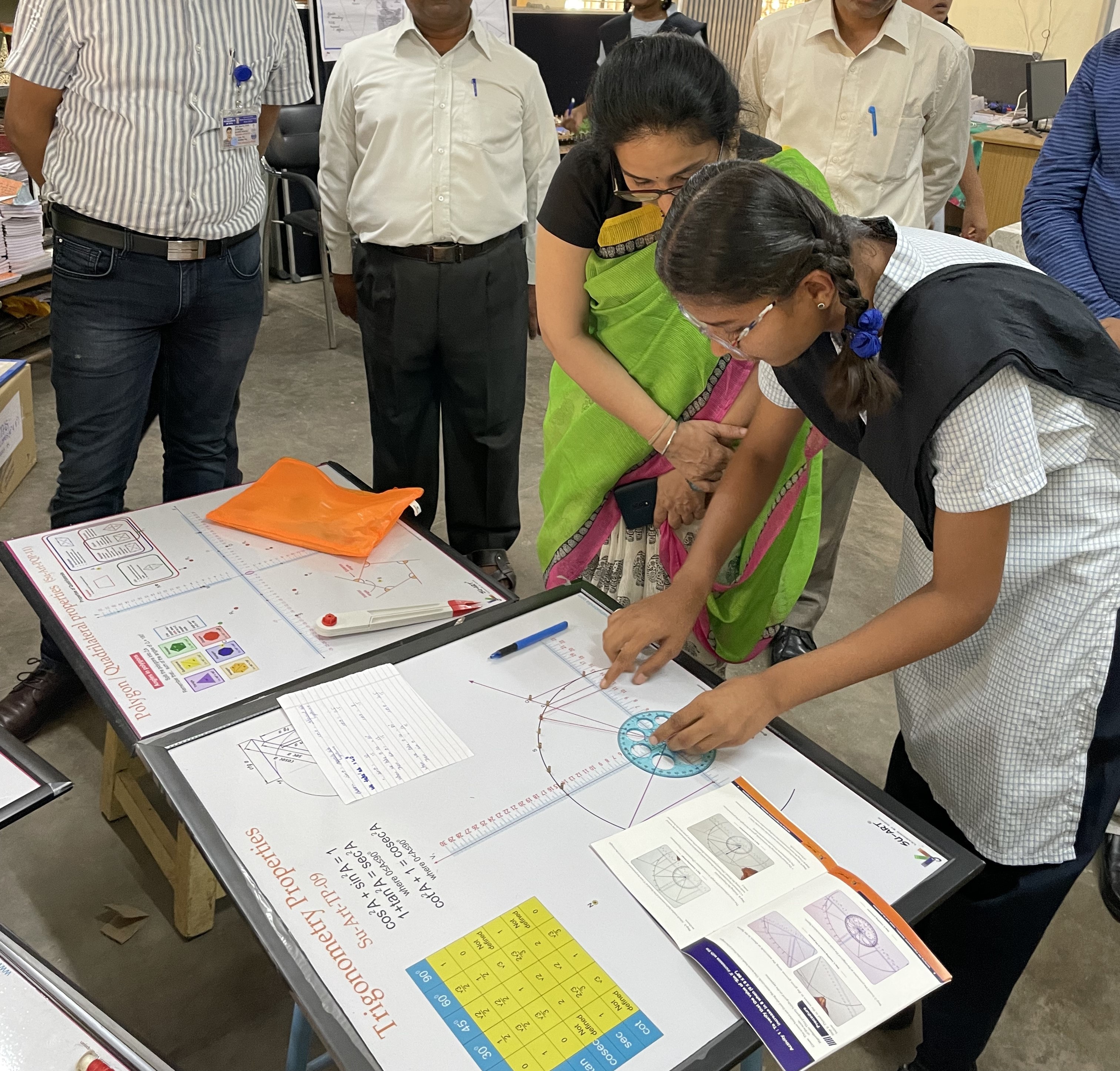
  • Construct right triangles of different sizes using threads, screws and a protractor
  • Verify that changing the size of a right triangle does not change its trigonometric ratios
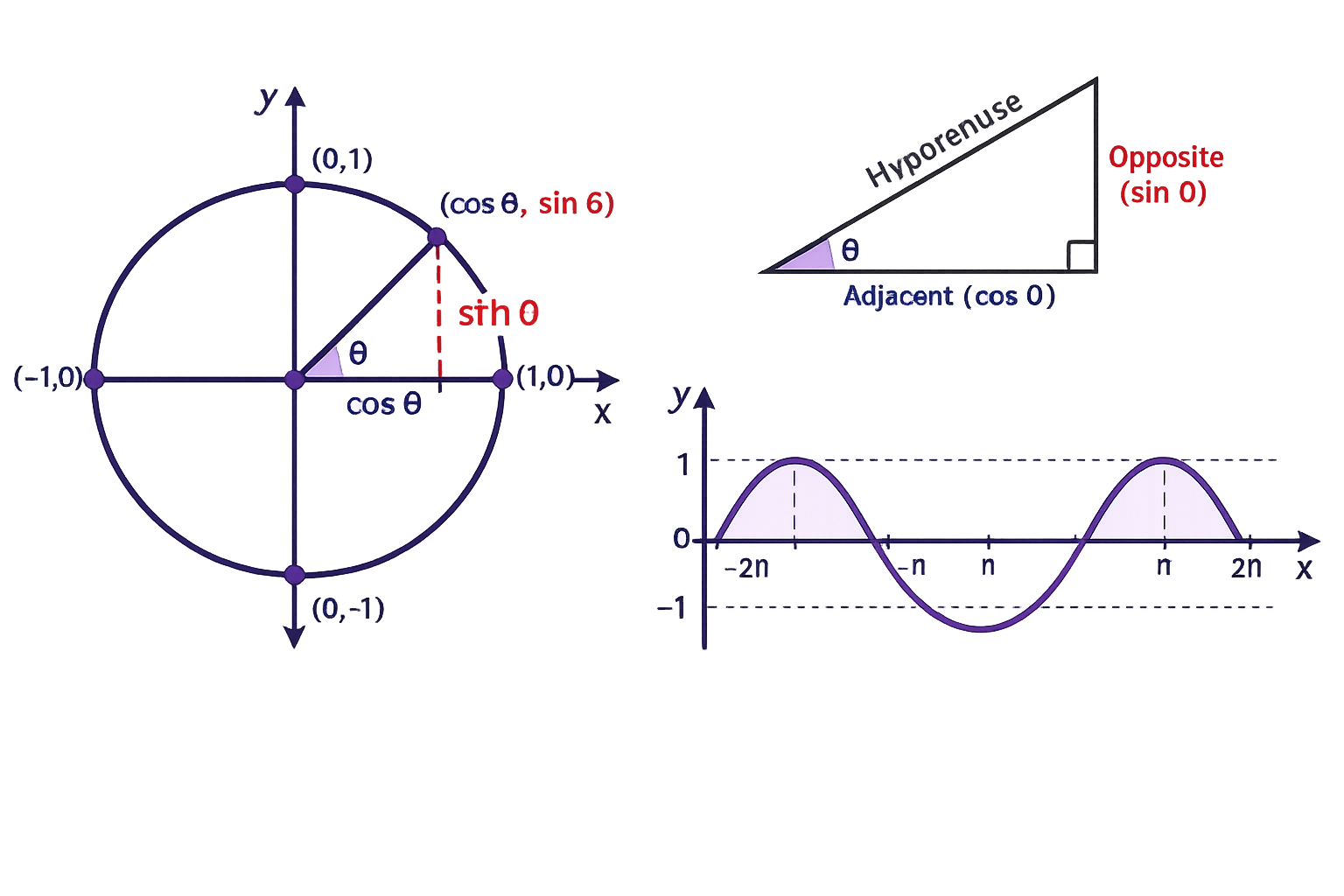
  • Observe that sine increases while cosine decreases as the angle increases
  • Investigate how the signs of trigonometric ratios change from quadrant to quadrant
  • Verify trigonometric identities and formulae such as sin 2A, cos 2A and sin(A+B) through investigation
  • Relate the coordinates of points on the unit circle to cosine and sine
  • Explain why trigonometric relationships remain true through construction and measurement

Why physical

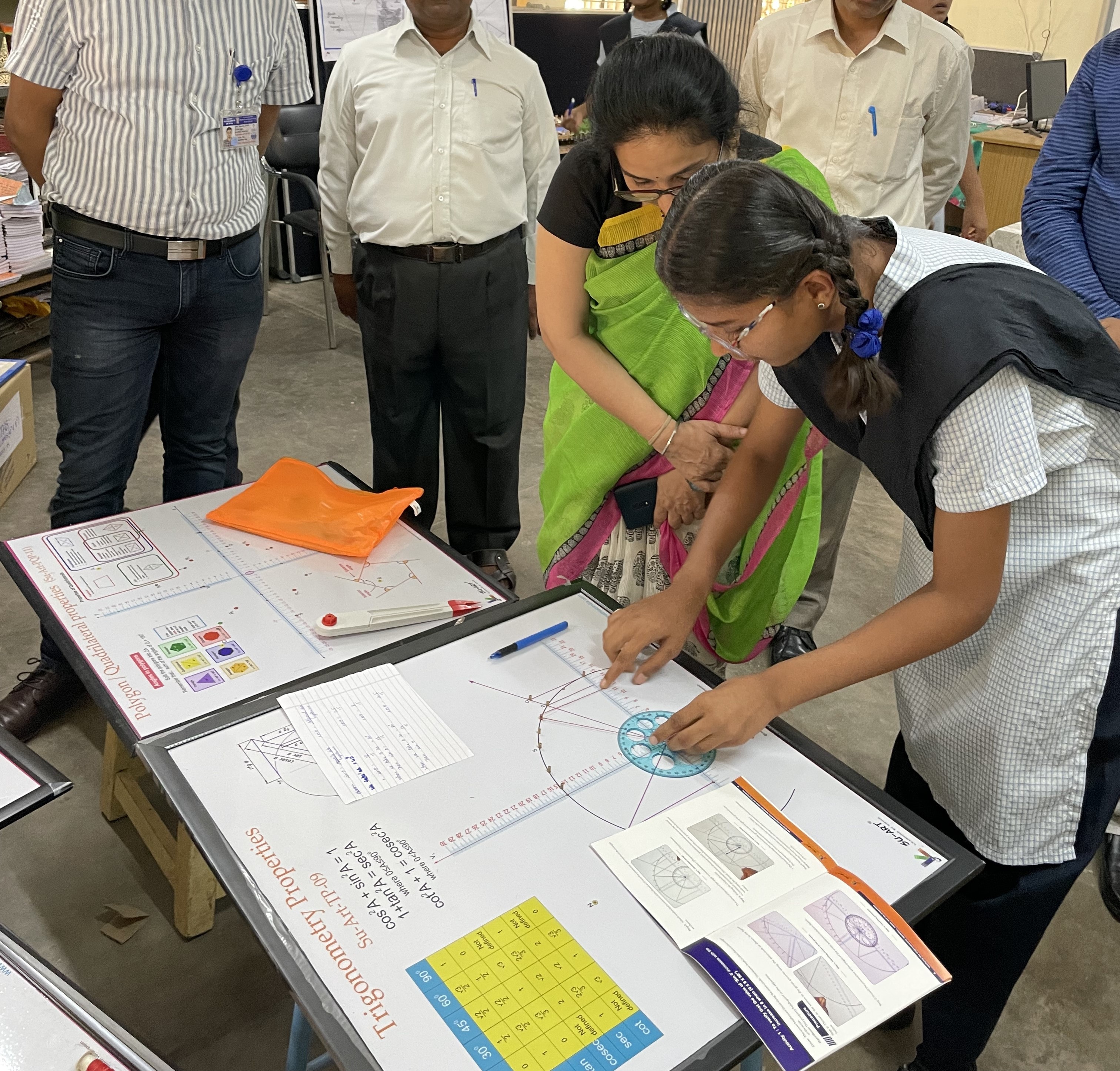
Unlike notebook-based derivations, students investigate trigonometry through construction, measurement and comparison using supplied threads, screws, bush screws, divider, protractor and other activity accessories.

Repeated construction and measurement help students understand why trigonometric relationships remain true instead of memorising identities and formulae.

Mathematics Covered

Trigonometric RatiosSimilar TrianglesVariation of Sine & Cosine RatiosQuadrant Sign ConventionUnit CircleTrigonometric IdentitiesTrigonometric Formulae

Questions students investigate

  1. 1Why do trigonometric ratios remain unchanged when the size of a right triangle changes?
  2. 2How do sine and cosine vary as the angle increases?
  3. 3Why do the signs of trigonometric ratios change from quadrant to quadrant?
  4. 4Why are the coordinates on the unit circle represented by cosine and sine?
  5. 5How can identities such as sin 2A, cos 2A and sin(A+B) be verified experimentally?
  6. 6Why do trigonometric identities always hold true?

The Operation Manual includes many additional guided investigations designed for classroom and laboratory use.

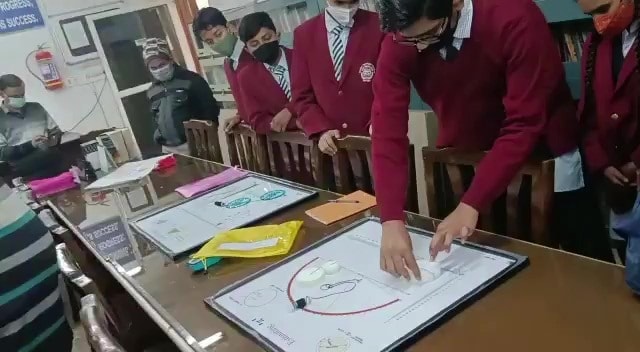
Students working on Trigonometry Learning System

From a real classroom

The investigations in the Operation Manual are only the beginning.

Mathematics teachers frequently extend them by framing new questions and encouraging students to explore additional trigonometric relationships through construction and measurement.

While discussing why tan 90° is undefined, a teacher did not begin with the formula. Students gradually increased the angle on the apparatus, measuring the base and height each time.

As the angle approached 90°, they observed that the measurable base became smaller and smaller until it disappeared completely.

Students did not memorise that tan 90° is undefined. They discovered that as the angle approaches 90°, the measurable base approaches zero, making the tangent ratio impossible to determine experimentally.

This investigation emerged from the teacher's classroom discussion and was not part of the original Operation Manual.
Classes VI – X

Statistics & Data Handling Learning System

From Calculation to Statistical Judgement

Statistics & Data Handling Learning System illustration

Enable investigations that are difficult to sustain consistently through paper-and-pencil activities alone.

Teachers guide students to compare different data sets, investigate distributions, question assumptions and justify why one measure of central tendency is more appropriate than another.

In the classroom

  • Collect and organise data
  • Model different data distributions using the apparatus
  • Calculate Mean, Median and Mode
  • Compare all three measures on the same data set
  • Judge which measure best represents a particular situation
  • Justify their choice using experimental evidence
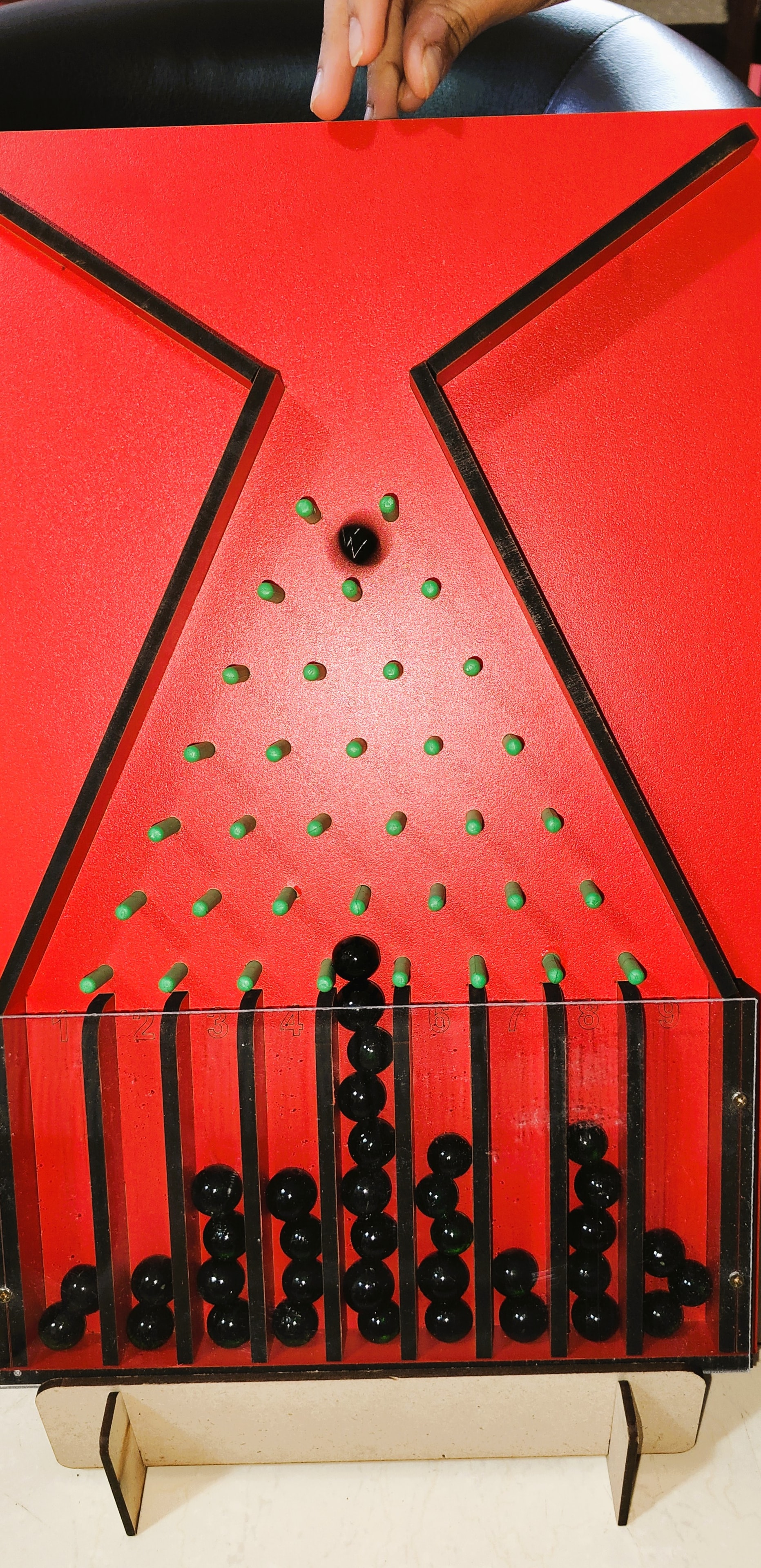
  • Observe the effect of skewed distributions using the Galton Board experiment

Collect → Model → Calculate → Compare → Judge → Justify

Why physical

Rather than solving isolated textbook problems, students generate, manipulate and analyse data using the supplied apparatus, marbles, pegs and other activity accessories.

They experience how changing the data changes the statistical conclusion, helping them appreciate that statistics is a process of reasoning rather than simply applying formulae.

Mathematics Covered

MeanMedianModeMeasures of Central TendencyData DistributionSkewed DistributionStatistical Decision-MakingExperimental Probability (through the Galton Board)

Questions students investigate

  1. 1Is the Mean always the best measure of central tendency?
  2. 2When does the Median represent the data better?
  3. 3When is the Mode the most meaningful measure?
  4. 4How do skewed data distributions influence statistical conclusions?
  5. 5Can different data sets require different statistical measures?

The Operation Manual includes many additional guided investigations designed for classroom and laboratory use.

Students working on Statistics & Data Handling Learning System

From a real classroom

The investigations in the Operation Manual are only the beginning.

Mathematics teachers frequently extend them by introducing new data sets, encouraging students to compare different statistical measures and justify their conclusions.

Students analysed six different sample data sets represented on the apparatus. For each set, they calculated the Mean, Median and Mode.

Instead of asking for the correct numerical answer, the teacher asked: "Which measure best represents this data, and why?"

Students compared the three measures, discussed the influence of the data distribution and justified their choice using evidence from the activity. They gradually discovered that the most appropriate statistical measure depends on the nature of the data rather than on a fixed rule.

The Galton Board experiment further extended this understanding by allowing students to observe how repeated random events produce different data distributions and how those distributions influence statistical interpretation.

This investigation emerged from the teacher's classroom discussion and was not part of the original Operation Manual.
Not sure which Learning Systems are right for your school?

Our team will help you identify the most suitable Mathematics Learning Systems for your curriculum and class levels.

Talk to Our Team

Currently Under Development

The Future of Investigative Mathematics

Su-Art is extending the same investigative, apparatus-based approach to Senior Secondary Mathematics — bringing structured hands-on learning to Calculus, Differential Equations and beyond. These Learning Systems are currently under development.

d/dx

Differentiation

Apparatus-based investigations into rates of change, tangent lines and the geometric meaning of derivatives.

Integration

Physical models that help students understand area under a curve, accumulation and the Fundamental Theorem of Calculus.

dy/dx

Differential Equations

Investigative activities that connect rates of change to real-world phenomena through structured classroom exploration.

Schools interested in Senior Secondary Mathematics Learning Systems are welcome to register their interest.

Register Your Interest

Classroom Mathematics Learning System

Prayoganit – Classroom Mathematics Learning System

Bring Investigative Mathematics Learning into Every Classroom

Prayoganit is designed for schools that wish to implement inquiry-based mathematics learning during regular classroom teaching without establishing a dedicated Mathematics Laboratory.

Instead of passive demonstrations, students actively investigate mathematical concepts, make observations, collect data, analyse results and arrive at mathematical conclusions under the guidance of their Mathematics teacher.

Prayoganit Classroom Mathematics Learning System

Portable Classroom Solution

Two compact kits designed for easy classroom use and storage.

Complete Curriculum Coverage

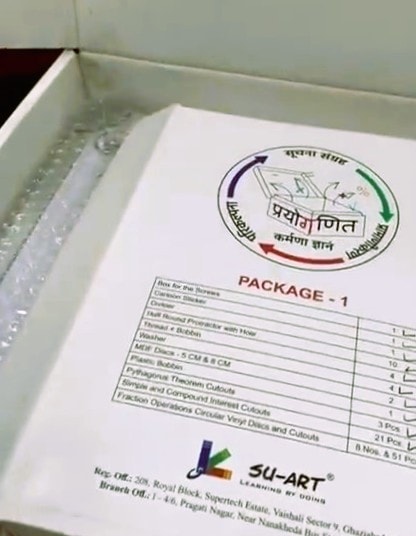
Package 1 covers Classes VI–VIII. Package 2 covers Classes IX–X. Together covering the complete secondary school mathematics curriculum.

Teacher-Friendly Implementation

Every kit includes apparatuses, accessories and illustrated activity manuals enabling teachers to conduct investigations confidently.

Active Student Participation

Students learn mathematics through investigation, observation, measurement, discussion and inference instead of passive listening.

Choose Your Prayoganit Classroom Package

Prayoganit Package 1

Classes VI–VIII

8 Mathematics Learning Systems
Portable Classroom Kit

Prayoganit Package 2

Classes IX–X

8 Mathematics Learning Systems
Portable Classroom Kit

How a Prayoganit Classroom Activity Works

01

Teacher introduces the Activity Objective

02

Students investigate using the apparatus

03

Students observe, measure and record data

04

Students analyse, infer and establish the mathematical concept

Prayoganit Classroom Mathematics Learning System

Bring Investigative Mathematics Learning into Your Classrooms

Whether your school wishes to introduce activity-based mathematics teaching in middle school, secondary school or both, we will help you select the appropriate Prayoganit Classroom Mathematics Learning System.

Want to understand the educational philosophy behind these learning systems?

Discover Why Schools Choose Su-Art

Trusted by Schools Across India

350+ Schools Served

Su-Art Mathematics Learning Systems are used by Kendriya Vidyalayas, Jawahar Navodaya Vidyalayas, government schools and private schools across India.

Refined Through Classroom Use

Each learning system has been developed and refined through sustained use in real school classrooms — shaped by feedback from Mathematics teachers and HODs.

Continued Institutional Adoption

Schools that begin with Su-Art Mathematics Learning Systems consistently expand their programmes — a reflection of sustained educational value in the classroom.

Questions Schools Commonly Ask

Mathematics Learning Systems for Schools

Every School's Mathematics Journey Is Different

Whether your school is establishing a new Mathematics Laboratory, strengthening classroom mathematics teaching or gradually expanding an existing Mathematics Laboratory, the most suitable Mathematics Learning System depends on your educational objectives and implementation plans.

We would be pleased to understand your school's requirements and recommend an appropriate Mathematics Learning System.